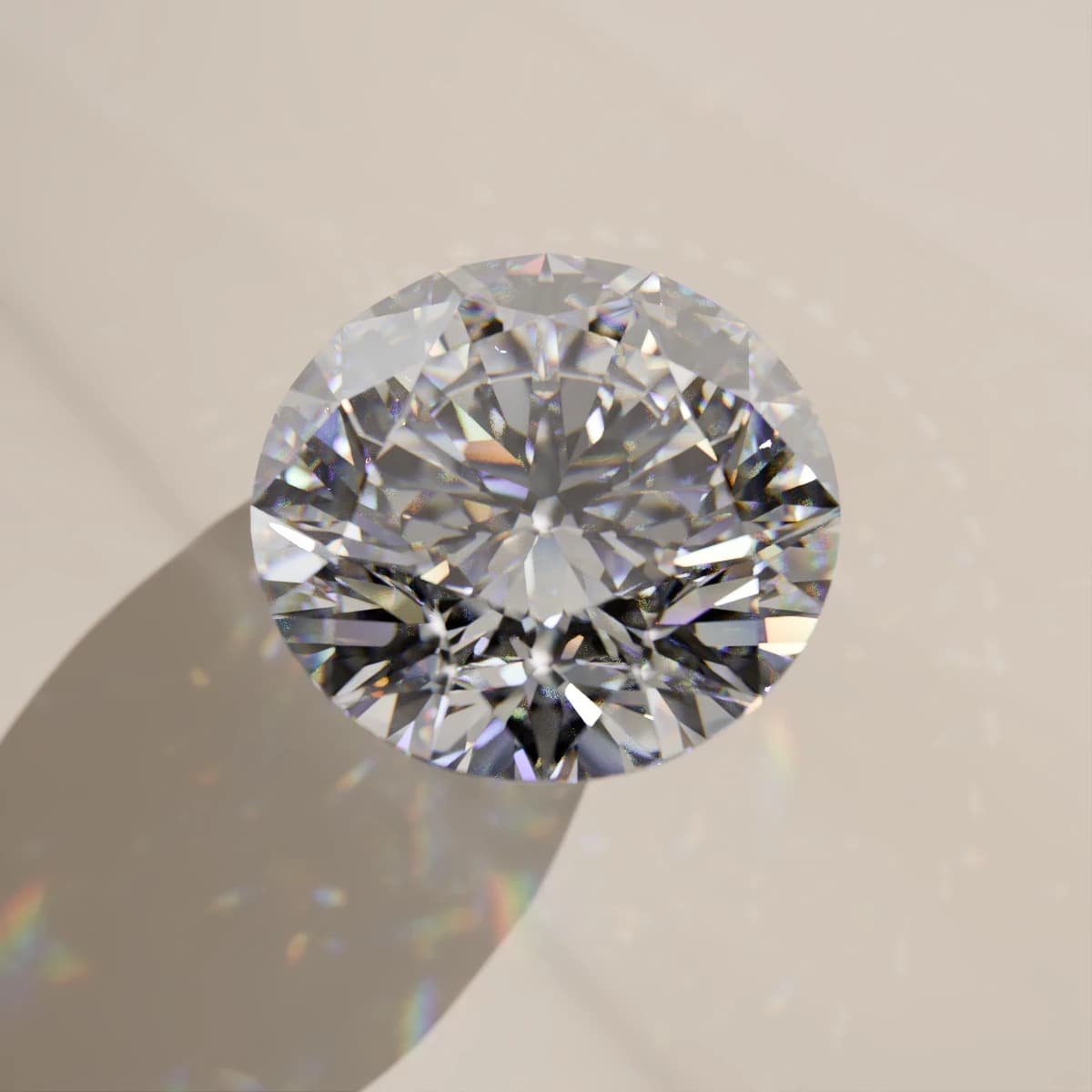
It's one of the first things people ask about moissanite, and it's worth a straight answer. A moissanite isn't a diamond and we never sell it as one. But it is the only common gemstone that can fool the simple tester most jewellers keep on the counter, and knowing why helps you understand what you're buying, what a jeweller will find when they check it, and why a certificate matters.
How a diamond tester works
Most handheld diamond testers are thermal testers. The tip is heated, touched to the stone, and the tester measures how quickly the heat drains away. Diamond is one of the best heat conductors there is, so heat leaves the tip fast and the tester beeps. Glass, cubic zirconia, white sapphire and most other white stones hold heat back and fail.
Thermal testers were designed in the 1980s, when cubic zirconia was the stone to catch. Moissanite didn't reach the jewellery market until 1998.
Why moissanite passes a thermal tester
Moissanite is silicon carbide, and silicon carbide is also an excellent conductor of heat. It's used in electronics for exactly that reason. To a thermal tester, a moissanite and a diamond feel much the same, so the tester reads moissanite as diamond.
That says nothing about value or quality. It means the tester asks one question, “does this carry heat like diamond?”, and moissanite answers yes.
The tester that tells them apart
Silicon carbide is a semiconductor: it conducts a small electric current. Almost all diamond does not. A multi-tester checks heat first and then electrical conductivity, and shows “diamond” or “moissanite” separately. A standalone moissanite tester checks conductivity alone. Most jewellers in South Africa now keep one of these, and any gem lab does.
| Tester | What it measures | Moissanite reads as |
|---|---|---|
| Thermal (basic) diamond tester | How fast heat leaves the tip | Diamond |
| Moissanite tester | Electrical conductivity | Moissanite |
| Multi-tester | Heat, then electrical conductivity | Moissanite |
| Gem lab | Optical and physical properties under instruments | Moissanite, conclusively |
Where electrical testers can be wrong
A few diamonds conduct electricity too. Natural blue diamonds (type IIb) owe their colour to boron, which makes them conductive, and some lab-grown diamonds carry traces of boron from the growing process. An electrical tester can read either as moissanite. That's rare, and it's why a tester is a quick check rather than the last word.
How a jeweller confirms it without a tester
- Double refraction. Moissanite is doubly refractive; diamond is not. Looking through the stone at an angle with a 10× loupe, a jeweller sees the back facet edges doubled. Good cutters orient the stone so you don't see this face-up, so it shows only from the side.
- Fire. Moissanite splits light into colour more than twice as strongly as diamond (dispersion 0.104 against 0.044). In sunlight, a trained eye notices the extra rainbow.
- Weight. Moissanite is lighter than diamond (specific gravity 3.21 against 3.52), so a moissanite of a given size weighs about 10% less. Our size chart explains how that is graded.
- Inclusions. Under magnification, moissanite can show fine needle-like growth marks that diamond doesn't have.
Moissanite and lab-grown diamond on a tester
Lab-grown diamond is real diamond, so it passes a thermal tester for the same reason a mined diamond does. Most standard testers can't tell lab-grown from mined at all; that takes lab equipment. If you're weighing the two grown stones, our lab-grown diamond or moissanite guide compares them on what you'll actually notice.
What this means when you buy
Because a basic tester can't tell them apart, moissanite is sometimes sold second-hand, or by dishonest sellers, as diamond. If a “diamond” is priced far below what diamond costs, ask for it to be checked on a multi-tester or by a gem lab before you pay.
The other way round matters too. A cheap stone sold as moissanite is sometimes cubic zirconia, which fails a thermal tester straight away. Our moissanite vs cubic zirconia guide shows how to tell those two apart.
Every stone we sell is moissanite, sold as moissanite, with a certificate of authenticity and a lifetime warranty. If your jeweller wants to test it before setting it, they're welcome to, and a multi-tester will say exactly what it is. Browse the stones, or read moissanite vs diamond for everything else that differs.
Does moissanite pass a diamond tester?+
On a basic thermal diamond tester, usually yes, because moissanite carries heat almost as well as diamond. A multi-tester or moissanite tester, which also measures electrical conductivity, identifies it as moissanite.
Can a jeweller tell moissanite from diamond?+
Yes. A multi-tester tells them apart in seconds, and under a 10× loupe a jeweller can see moissanite's double refraction as doubled facet edges when looking through the stone at an angle.
Why does moissanite test as diamond?+
Basic diamond testers measure thermal conductivity. Moissanite (silicon carbide) conducts heat very well, close to diamond, so a thermal tester can't distinguish the two.
Does cubic zirconia pass a diamond tester?+
No. Cubic zirconia holds heat back, so it fails a thermal diamond tester straight away. Moissanite is the only common white gemstone that passes one.
Does lab-grown diamond pass a diamond tester?+
Yes. Lab-grown diamond is real diamond, so it passes a thermal tester. A few lab-grown diamonds contain boron and can read as moissanite on an electrical tester; a gem lab settles it.