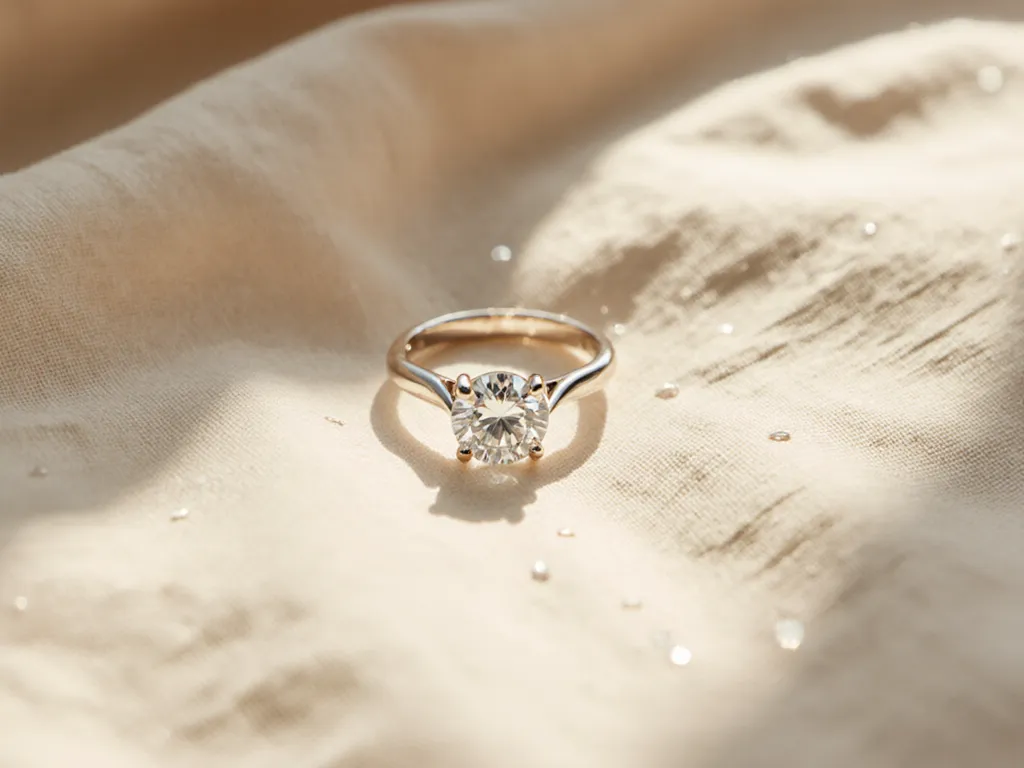
There is no single price for an engagement ring, because a ring is several purchases in one: a centre stone, the metal, the work of making and setting it, and sometimes smaller side stones. Once you know where the money goes, it becomes much easier to decide where to spend it and where to save. This guide is written from our side of the counter — we sell loose moissanite, and any good jeweller can set it for you.
Where the money goes in a ring
- The centre stone. Usually the largest single cost, and the one with by far the widest range. The type of stone matters more than anything else you choose.
- The metal. Gold or platinum, priced largely by weight and purity. A heavier band costs more.
- Making and setting. The jeweller's labour. A plain solitaire takes less work than a detailed or hand-made design.
- Side stones. A halo or a band of small stones adds both stones and hours of setting work.
The centre stone changes the total most
Two rings with the same band and setting can differ in price many times over, purely because of the stone in the middle. Here is how the main choices compare for a stone of about one carat:
| Centre stone | About 1 ct, colourless |
|---|---|
| Moissanite (DEF, VVS) | R 2 400 at Moissanite SA |
| Lab-grown diamond | At least twice the price of moissanite |
| Mined diamond (D–F, eye-clean) | Well over R100,000 |
Moissanite is priced by size alone. Our smallest round, 0.50 ct (5mm), costs R 1 600, and a 2.00 ct (8mm) costs R 4 000. All ten cuts are priced by weight, so the shape you choose doesn't change the price. The full table is in our moissanite price guide.
Diamond wins on some things: it is harder (10 on the Mohs scale against moissanite's 9.25) and it is the traditional choice. Moissanite has more fire and brilliance and is tough enough for daily wear. If you are weighing the two, read lab-grown diamonds vs moissanite and moissanite vs diamond.
Metal choices and what they do to the price
9ct or 18ct gold
The carat number on gold is its purity: 18ct is 75% gold and 9ct is 37.5% gold, the rest being other metals. 18ct costs noticeably more for the same ring, has a richer colour and is the usual choice for fine jewellery. 9ct is harder-wearing and the most affordable way to have a gold ring.
Platinum
Platinum rings usually cost more than 18ct gold. The metal is denser, so a ring of the same size uses more of it, and it is used close to pure. It is naturally white and wears well, which is why many people choose it for a ring they will wear every day.
White or yellow
White and yellow gold of the same carat cost much the same. White gold is usually plated with rhodium to make it brighter, and that plating wears and needs redoing every so often — a small running cost worth knowing about. With a colourless stone, either colour of metal works; white metal simply shows off a white stone's colour more plainly.
Costs people forget
- Sizing. Getting the size right first time avoids a resize later. Our South African ring size guide shows how to find it discreetly.
- Resizing. Most plain bands can be resized by a jeweller, but it costs money and some designs (a band of stones all the way round, for example) are difficult or impossible to resize.
- Insurance. Adding a ring to your household policy usually needs a valuation, and the premium follows the value. A lower-priced ring costs less to insure.
- Upkeep. Claws are worth having checked from time to time, and white gold needs replating now and then.
- The wedding band. If you plan to wear a band alongside the engagement ring, budget for both at the start.
How to set a budget
Start with what you can pay without debt, not with a rule of thumb. The old “months of salary” figure began as a diamond advert, not a tradition — we explain where it came from, and a better way to decide, in the three-month salary rule, and what to do instead. Then split that figure between the stone and the setting, and decide which one matters more to you.
How to get good value
- Choose the stone first. It sets most of the price, so decide on its type and size before you fall for a setting.
- Don't pay for grade you can't see. With moissanite there is no ladder of grades to climb: we sell only DEF colourless, VVS clarity.
- Keep the setting simple. A solitaire puts the money into the stone. A halo or pavé band adds stones and labour.
- Buy the stone and the setting separately. Buying a loose stone and having a jeweller set it shows you what each part costs.
- Check the size before you buy. Every stone on our gemstones page is shown at true size on a hand, calibrated to your screen with a bank card.
Every stone we sell comes with a certificate of authenticity, a lifetime warranty, free tracked courier and 14-day returns. If you would like help choosing a size for a setting you have in mind, get in touch.
How much does an engagement ring cost in South Africa?+
It depends mostly on the centre stone. A 1.00 ct round moissanite costs R 2 400 at Moissanite SA; a lab-grown diamond of that size costs at least twice as much, and a mined colourless 1 ct diamond costs well over R100,000. The metal and setting are added on top.
What is the average engagement ring cost in South Africa?+
An average hides a very wide range, because the choice of centre stone can change the total many times over. It is more useful to set your own budget, then choose the stone and the metal to fit it.
How can I buy an engagement ring on a budget?+
Put the money into the centre stone and keep the setting simple. Moissanite gives a large, colourless stone for a fraction of the price of diamond, and a plain solitaire in 9ct or 18ct gold keeps the metal and labour down.
Is platinum or gold more expensive for an engagement ring?+
Platinum rings usually cost more than 18ct gold, because platinum is denser and used close to pure. 18ct gold costs more than 9ct, which is the most affordable gold.
What extra costs come with an engagement ring?+
Resizing if the size is wrong, insurance and the valuation it needs, occasional upkeep such as checking claws and replating white gold, and the wedding band if one will be worn alongside it.